Reimagining Mumbai's Eastern Waterfront
Unlocking the Potential of Mumbai's Historic Port Lands Through Integrated Urban Regeneration
For over three centuries, Mumbai's Eastern Waterfront has shaped the city's economic growth, maritime identity, and urban development. As the city's historic gateway to trade, the waterfront played a central role in transforming Bombay from a cluster of fishing villages into India's premier port city. However, shifts in the regional economy, industrial decline, and changing port operations have left large parts of the waterfront underutilised and disconnected from the rest of the city. Recognising both the challenges and opportunities of this transformation, the Urban Design Research Institute (UDRI), in collaboration with the Design Cell at Kamla Raheja Vidyanidhi Institute for Architecture (KRVIA), undertook A Study of the Eastern Waterfront of Mumbai, presenting a comprehensive situation analysis to guide the future regeneration of one of Mumbai's most significant urban assets.
Reimagining Mumbai's Eastern Waterfront
Why the Eastern Waterfront Matters?
The Eastern Waterfront is much more than a collection of docks and port infrastructure. It represents the birthplace of Mumbai's maritime economy and the foundation upon which the city developed as a global commercial centre.
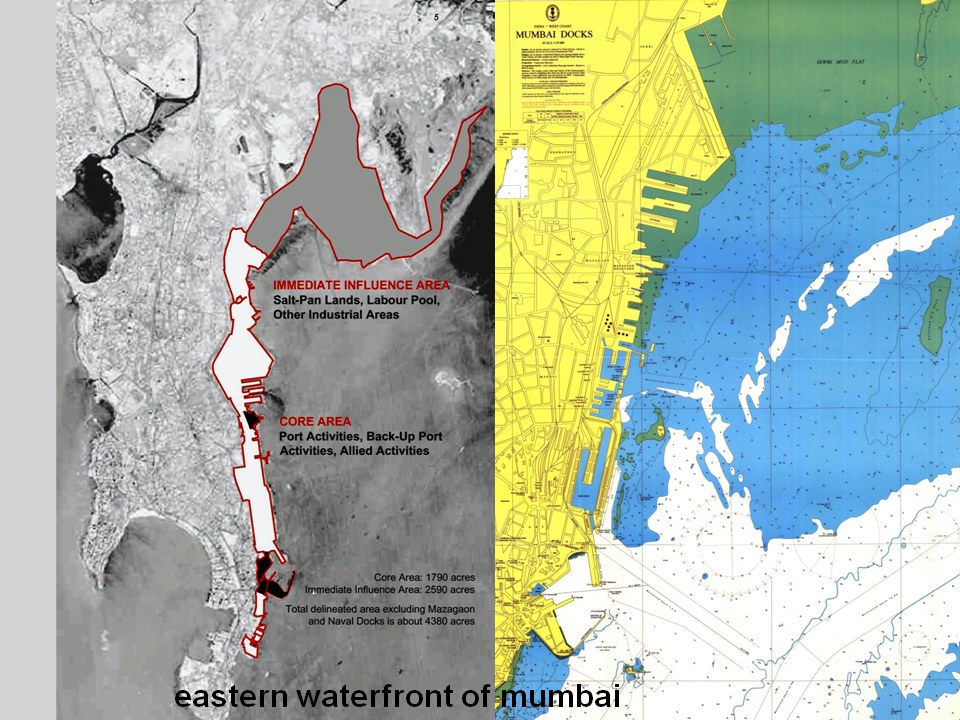
For centuries, the port, industries, railways, warehouses, and surrounding neighbourhoods evolved together, creating a unique urban landscape where economic activity and city building were deeply interconnected. As Mumbai's economy shifted from manufacturing to services, however, many industrial and port related functions declined, leaving extensive tracts of land underutilised while the city continued to face growing pressure for public spaces, housing, mobility, and economic opportunities.
Understanding a Changing Waterfront and Opportunities for Future Planning
The Study of the Eastern Waterfront of Mumbai serves as a foundational research document that brings together history, urban planning, economic analysis, and spatial research to inform future decision making. It examines the Eastern Waterfront not as an isolated precinct, but as part of Mumbai's broader urban transformation.
The report argues that economic transformations have fundamentally altered the role of the Eastern Waterfront, creating new opportunities for regeneration while raising important questions about the future of the port and its relationship with the city.
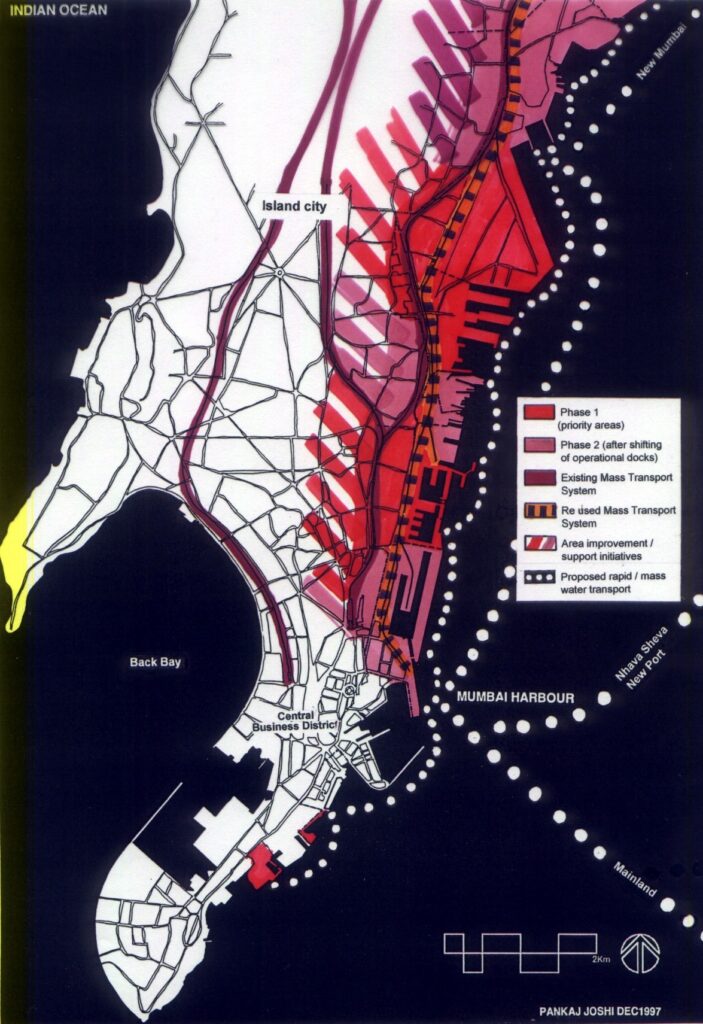
Through historical analysis, land use assessment, institutional review, and spatial mapping the report provides the foundation for developing future planning strategies that respond to changing urban realities rather than short term development pressures.
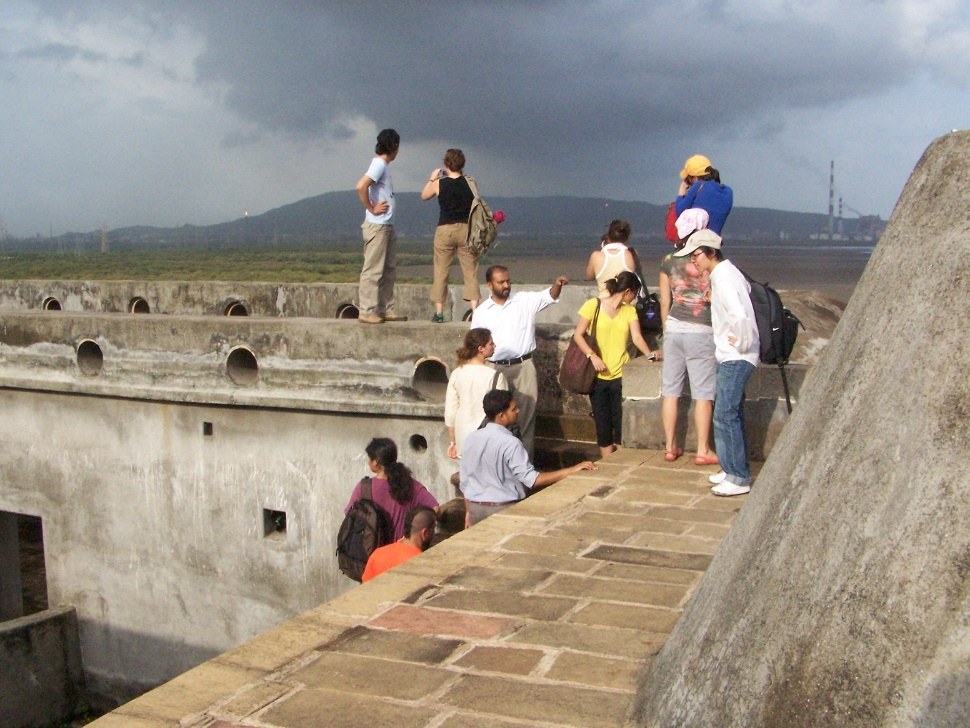
Documentation of Mumbai's Eastern Water Front in collaboration with KRVIA and Harvard Graduate School of Design
One of the report's central findings is that the Eastern Waterfront should be viewed as a strategic urban asset rather than simply surplus port land. As these lands occupy a critical location between South Mumbai, the harbour, and Navi Mumbai, they offer significant opportunities to reconnect the city with its eastern shoreline.
The report also cautions against treating the Eastern Waterfront as merely a real estate opportunity. It emphasises that future development should balance the operational needs of the port with wider urban objectives, including improved accessibility, economic revitalisation, environmental enhancement, and better integration with surrounding neighbourhoods including the wider Mumbai Metropolitan Region.
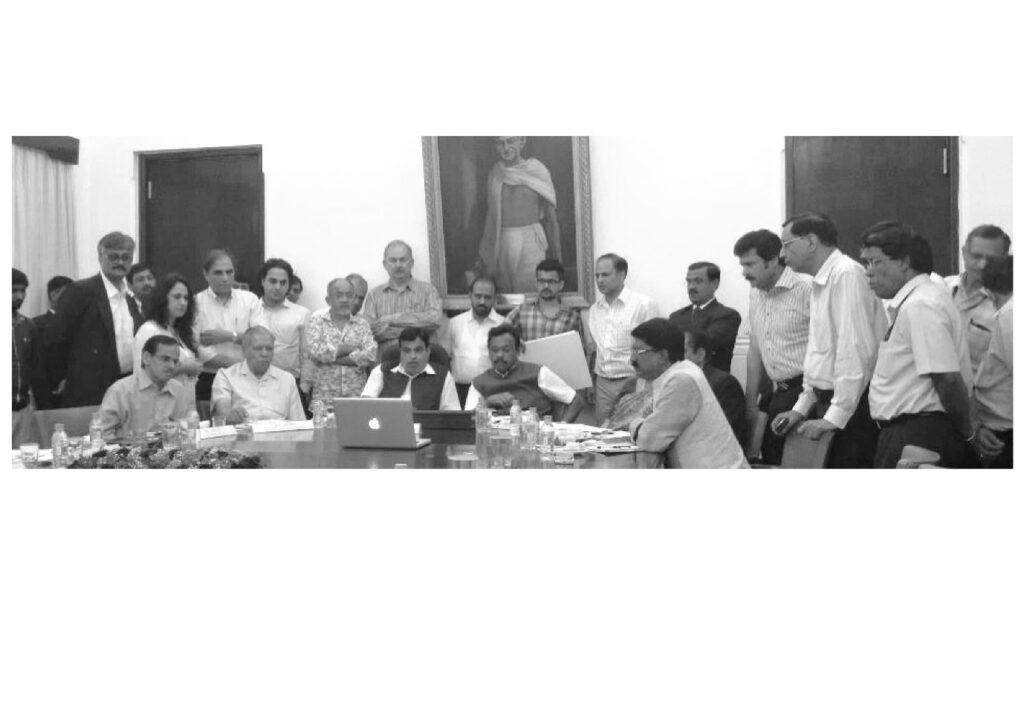
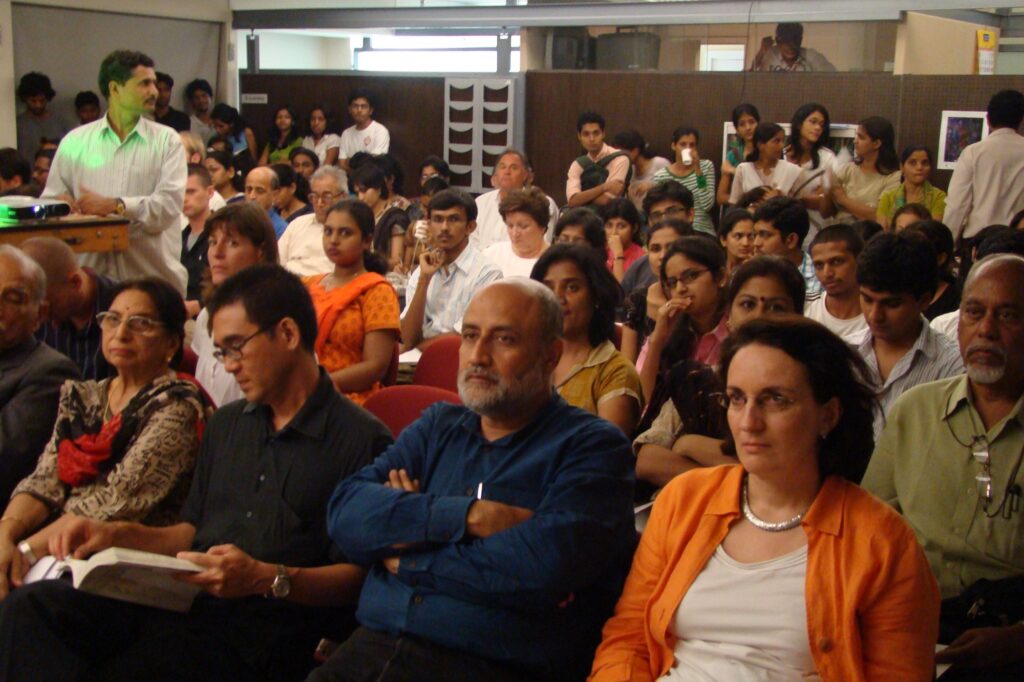
UDRI presenting Eastern Waterfront Study to theGovernment of India's Minister of Shipping and Ports Shri. Nitin Gadkari in 2014
The ‘Reimagining Mumbai's Eastern Waterfront‘ report provides policymakers, planners, researchers, and urban practitioners with a deeper understanding of the forces that have shaped Mumbai's eastern shoreline and the opportunities that lie ahead. Rather than prescribing a single master plan, it establishes the analytical framework necessary for developing context sensitive and sustainable regeneration strategies.
Looking Ahead
As Mumbai continues to evolve, the Eastern Waterfront represents one of the city's greatest opportunities to reconnect its people with the harbour while creating new spaces for economic activity, mobility, culture, and public life.
UDRI's study demonstrates that successful waterfront regeneration requires more than physical redevelopment. It calls for a careful understanding of history, economic transformation, institutional coordination, and regional planning. By viewing the Eastern Waterfront as an integral part of Mumbai's future rather than a collection of underutilised port lands, the report lays the foundation for a more connected, resilient, and inclusive waterfront for generations to come.
Gallery
View All Images
Related Projects
Reimagining Mumbai's Eastern Waterfront
Unlocking the Potential of Mumbai's Historic Port Lands Through Integrated Urban Regeneration
Digital Inclusion
Making Urban Data Accessible for Better Planning
Refurbishment and Upgradation of MG Road, Fort, Mumbai
Transforming Historic Streets Through Heritage Sensitive Urban Design